
Projects.
A closer look at the work behind the cards.
Phoenix Live Survey
Lead designer. Front-end developer. Project manager.
2024 — Present · Live, in active sales rollout · SaaS Product
www.phoenixlivesurvey.comOverview
Phoenix is a real-time guest experience platform for hotels. Guests can update their status from their phone, and hotel staff see those updates instantly on a desktop dashboard — letting them respond before small issues become complaints.
It's two interfaces in one product: a lightweight, phone-friendly guest experience, and a denser desktop tool for staff working under pressure during a shift.
The design problem
When guests have a bad experience at a hotel, they often don't say anything to staff — they just leave, and write the bad review later. By then it's too late to fix anything. Hotels lose the chance to make things right and take the reputation hit.
The product hypothesis: if there was a frictionless, comfortable way for guests to signal "I'm not happy" while they were still in the room, staff could fix issues in real time instead of finding out about them online a week later.
The central design challenge was making it feel effortless and low-stakes to share how you're feeling — quick enough that even satisfied guests would do it casually, comfortable enough that unhappy guests wouldn't feel like they were being demanding.
" Each iteration was about reducing the feeling that you were 'rating' anything, and making it feel more like a quick gesture. "
What we built
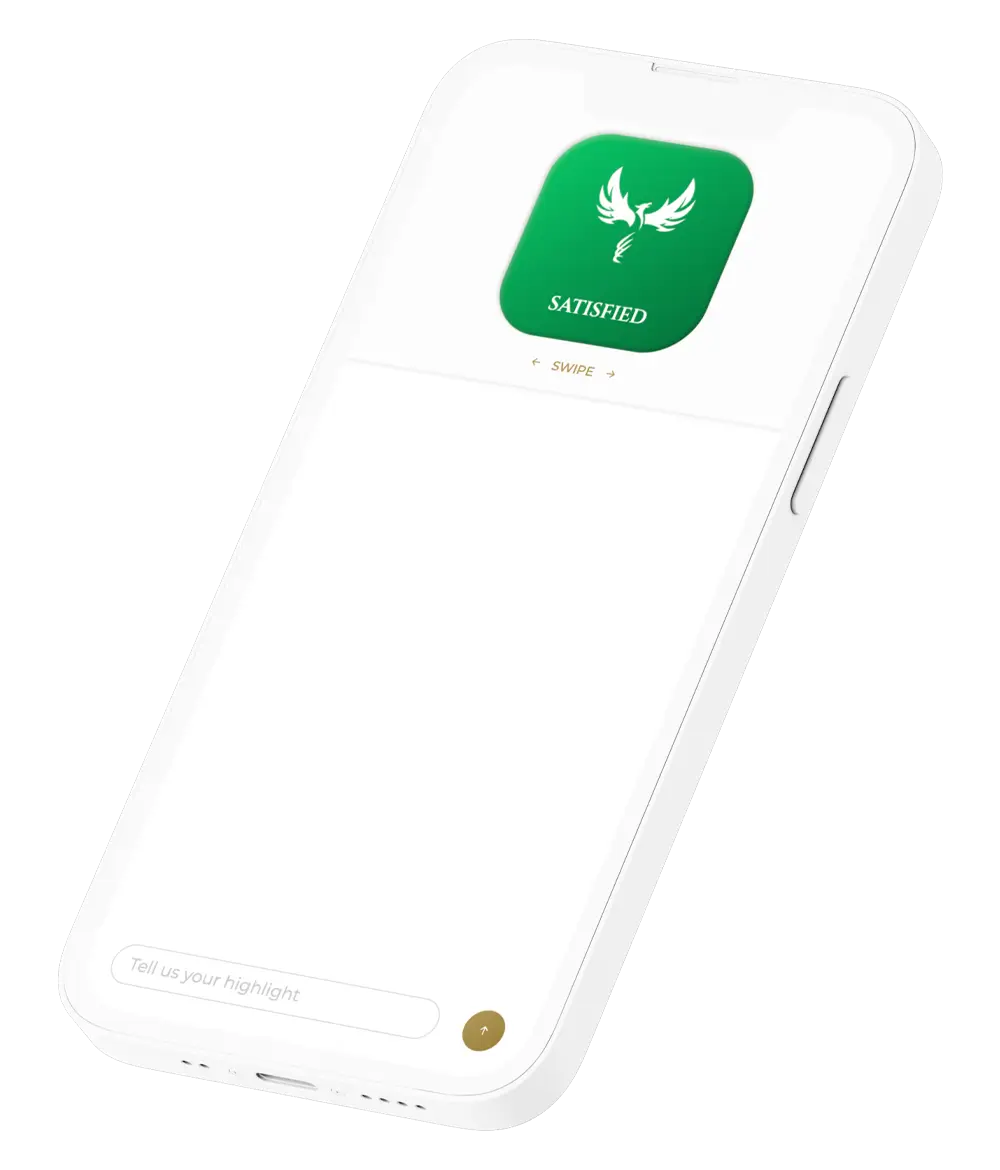
The interaction I'm proudest of is the spin badge — a swipeable, three-state control that moves between satisfied → neutral → dissatisfied. Guests don't have to type, choose from a list, or fill out a form. They drag a single element, see immediate visual feedback, and that's it.
The badge went through a lot of small tweaks during build — animation speed, snap behavior, visual states, the language for each level. Each iteration was about reducing the feeling that you were "rating" anything, and making it feel more like a quick gesture.
I designed Phoenix directly in the browser, hand-coding in HTML and CSS rather than starting in Figma. With a one-to-three-month timeline, working in code let me iterate on real interactions instead of static mockups — especially important for the spin badge, where the feel of the interaction was the whole point.
I also built a loose component system as I went — shared patterns for buttons, status indicators, and dashboard cards — so the staff and guest interfaces stayed consistent without a formal design system.
Major League Coatings
Solo design. Developer.
2025 · Live · Marketing Website
www.majorleaguecoatingsutah.com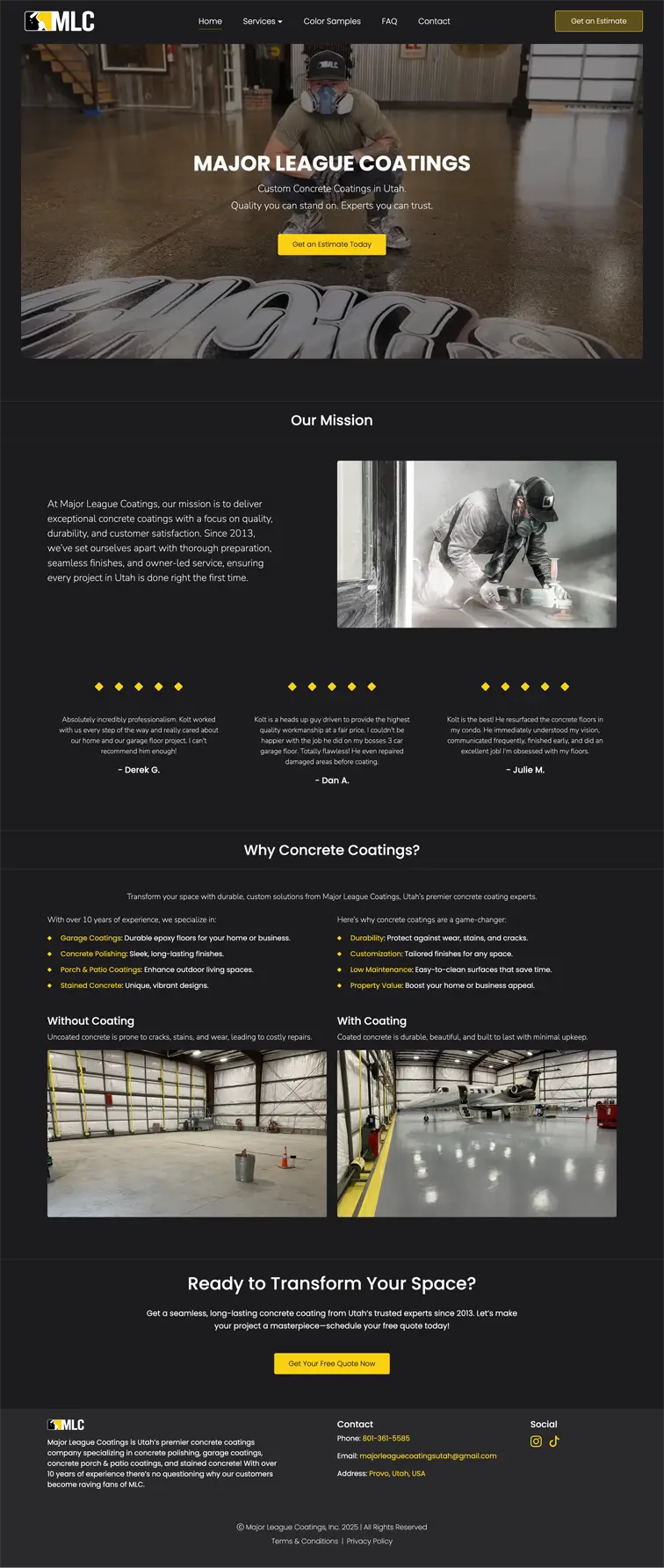
Overview
Major League Coatings is a small Utah-based coatings company. The owner is a friend who came to me with a problem most local businesses have: a broken, outdated website that wasn't helping him win new work — and may have been hurting him.
I designed and built a new site from scratch: brand voice, layout, content structure, SEO, deployment, the whole thing.
What I focused on
The site exists to do one job: help the owner convince a potential customer that his work is high quality. So the design priorities were straightforward — clean visual presentation of the work, easy-to-scan service information, fast load times, and a clear call to action to get in touch.
Most of the design decisions came down to keeping things simple and trusting the photography of his actual work to do the heavy lifting. A small business marketing site doesn't need to be clever; it needs to be credible.
Outcome
The owner uses the site as a sales tool now — he points potential customers to it when discussing projects, and tells me it's been useful in helping land work. No formal metrics, but the site is doing exactly what it was built to do.
GiftHub
Designer. Front-end developer.
2024 — Present · Live · Personal Project · PWA
www.gifthub.meOverview
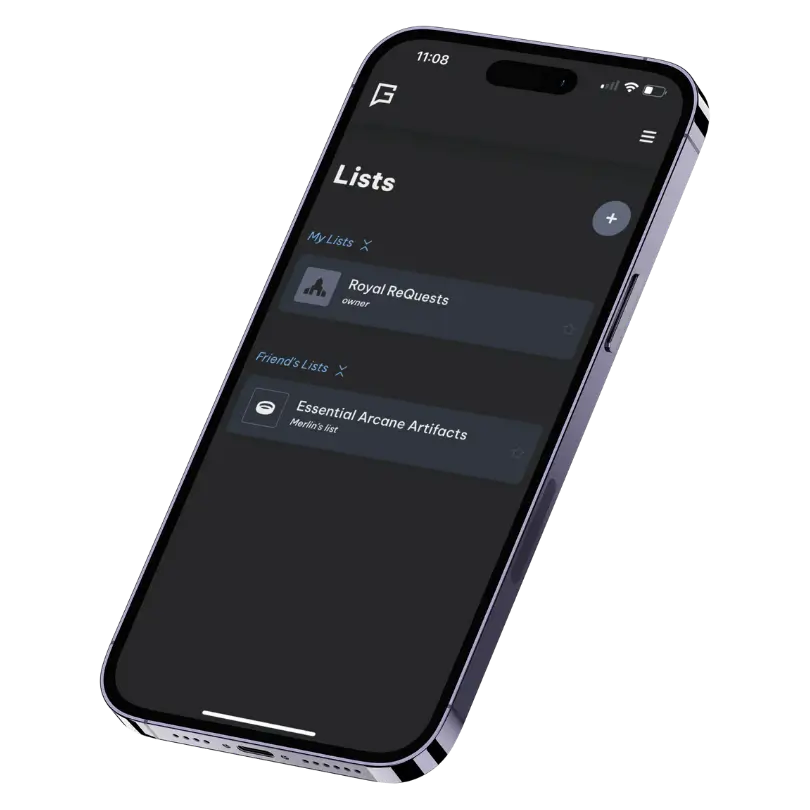
GiftHub is a wishlist app I designed and helped build for my own family and friends. People create lists of things they'd like, share the lists with their circle, and others can quietly claim items so no one accidentally buys the same gift twice.
It's a personal project — I wanted it to exist, so I built it. It's been live since 2024 and I'm still actively improving it.
Why a PWA
PWA was the goal from the start. The use case is naturally mobile (people pull out their phones at family gatherings to check the list) but native apps were overkill — there's nothing here that needs camera access, push notifications were optional, and asking family members to download an app from a store just to view a Christmas list felt like too much friction.
A PWA gave me the mobile feel without the install barrier. People open a link, the app loads, and if they use it often it can be saved to their home screen like a real app. That low-commitment entry point was important for something used mostly by relatives who aren't tech-savvy.
A design decision I'm proud of
The claim-tracking feature lets gift-givers reserve an item from someone's list so others don't duplicate it. The interesting design question was: should the list owner see who claimed what?
There's a case for both. Some people want the surprise preserved and would rather not know. Others want to track who's engaging with their list, or are coordinating group gifts and need visibility.
Rather than picking one default, I let the list owner choose when they create the list. It's a small toggle, but it acknowledges that real households have different gift-giving cultures — and the design shouldn't assume one is right.
What I've learned maintaining it
The most interesting thing about GiftHub isn't how I designed it originally — it's what's happened since launch. Real-world use surfaces problems mockups never do: an edge case in how lists are shared with people who don't have accounts, friction in the sign-up flow that I didn't anticipate, requests for features I'd assumed weren't important.
Each round of improvements has made me a better designer because the feedback is direct, the users are people I know, and there's nowhere to hide from the things I got wrong. It's the closest a side project comes to actual product work.